Chocolate Making Tips

How to:


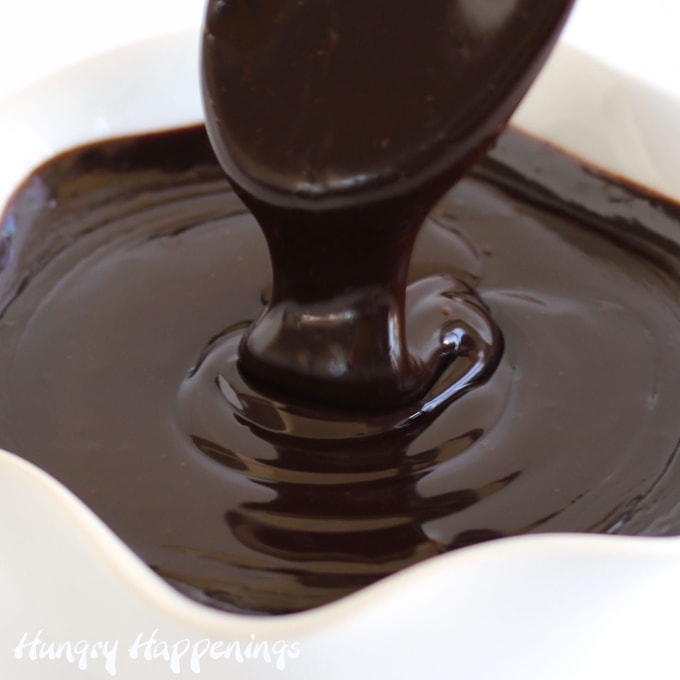
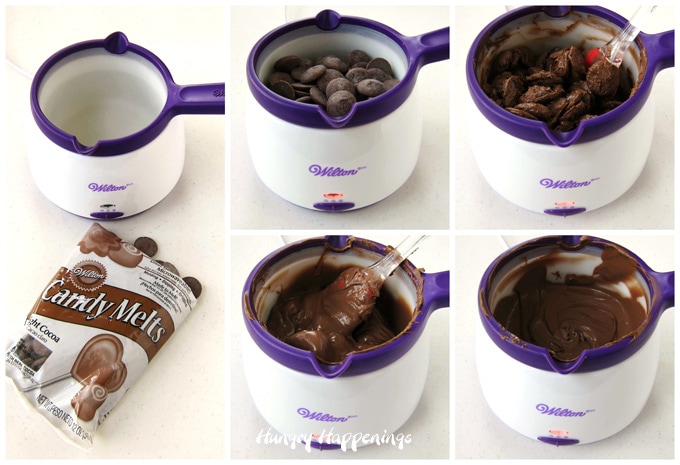
 Melt Chocolate & Confectionery Coating/Candy Melts

Color Confectionery Coating and Paint Lollipops

Make Modeling Chocolate/Chocolate Clay

Fix greasy, oily, dry, or sticky modeling chocolate


CHOCOLATE INFORMATION:

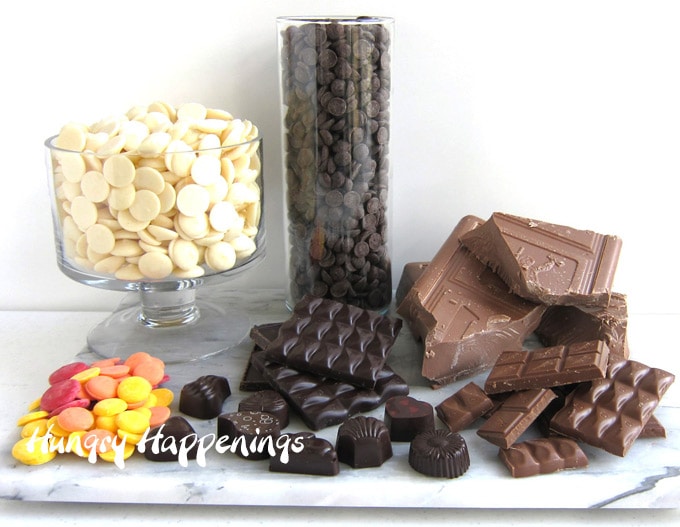
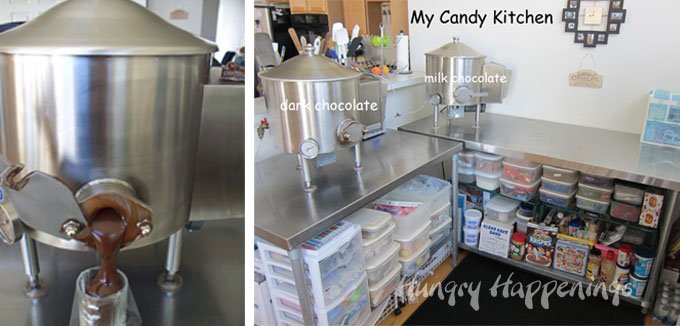
There are several different types of chocolate  that are available to the home cook for use in candy making:  pure chocolates, confectionery coating, and chocolate chips.  Pure chocolates contain cocoa butter and must be properly tempered in order to set up correctly.  Tempering refers to a process of heating and cooling pure chocolate to ensure that the cocoa butter in the chocolate hardens in a uniform crystal structure. Chocolate that is tempered has a smooth texture, a glossy shine and snaps when bitten or broken. Chocolate that is not tempered corectly might be cloudy, gray, or sticky at room temperature. There are four types of pure chocolates: unsweetened (no sugar added), bittersweet (small amount of sugar added), semi-sweet (more sugar added), and milk chocolate (milk and sugar added.)  White chocolate can also contain cocoa butter and need to be tempered, however, it doesn't contain any cocoa powder, so it isn't technically considered chocolate.  I will refer to it as white chocolate, when using it in a recipe, for lack of a better term. Tempering chocolate requires practice, but can be done in a home kitchen. I have been making chocolate for almost 30 years and I am fortunate to have two Savage Brothers 50 lb. chocolate kettles that do the tempering for me, so I don't have to hand temper my own chocolates.  There are so many great resources for those of you that would like to temper chocolates click here for directions.  If you don't have any chocolate making 

experience or you just feel that tempering is too difficult, don't fret as there is a chocolate product that is easy to melt and sets up beautifully with very little effort. Chocolate manufactures, such as Peters, Merkens, and Wilton make  products called candy melts, confectionery coating, or summer coating . These products do not contain any cocoa butter which is what needs tempering. The cocoa butter has been replaced with a vegetable oil, usually palm kernel oil, so that the product melts smoothly and sets up easily. The flavor is
definitely not the same as chocolates made with cocoa butter, but it is an acceptable alternative. This product is available in milk, dark, white, and even flavored and colored varieties. These coatings can be purchased from craft or cake decorating supply stores in wafers or blocks. I personally prefer the taste of Peter's confectionery coatings, but Merkens coatings are very popular and Wilton's coatings are easily available at most craft stores. The third type of chocolate available to home cooks is chocolate chips which are available in bittersweet, semi-sweet, milk, white (some with cocoa butter, some with palm kernel oil), peanut butter, butterscotch, and cinnamon flavors. Dark and milk chocolate chips usually contain cocoa butter and can be used for some recipes, however they have additives that allow them to retain their shape at higher temperatures so they don't melt as easily as a chocolate bar. If you melt chocolate chips and use them for candy making, unless you temper the chocolate, your candy will be soft and sticky. Please don't add paraffin (wax) to melted chocolate chips for dipping as some recipes suggest. Why would anyone want to eat wax? You are better off using a confectionery coating or learning to temper. Store chocolates in a cool dry place away from direct sunlight.  Pure chocolates have a shelf life of 18 months from the date of manufacturing and confectionery coating can last up to 9 months if stored properly but are best if eaten within 6 months.

MELTING CHOCOLATE OR CONFECTIONERY COATING INSTRUCTIONS:

If you are using a large block of chocolate or a candy bar, chop your chocolate into small uniform pieces. The best way to do this is to use a serrated knife to shave off small bits of chocolate.  Place the knife blade on the edge of the chocolate block, and press down on the top of the knife while shaving off a small amount of chocolate. Then just chop any larger bits before using. You can also use a food processor to chop your chocolate. Add small chunks of chocolate to the bowl of the food processor and pulse until you have fine crumbs.


Melting chocolate or confectionery coating in a double boiler:

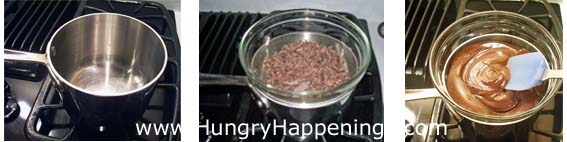
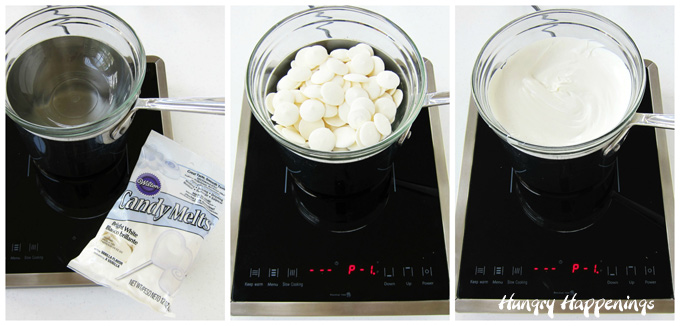
Heat 1” of water over low heat in a saucepan. Place a bowl over the saucepan, being sure the bottom doesn't touch the water. Put chopped chocolate, wafers, or chips in the bowl and stir occasionally until melted. It is very important that you do not allow any water to come in contact with the chocolate. Chocolate mixed with a drop or a few drops of water with seize (stiffen or harden). If this happens your only option is to add more liquid in order to get the chocolate smooth again.  However, you can not use this thinned batch of chocolate for tempering or dipping as it will never harden properly.  All is not lost as you can turn it into a delicious chocolate ganache or use it for baking.

Melting chocolate or confectionery coating in a microwave:
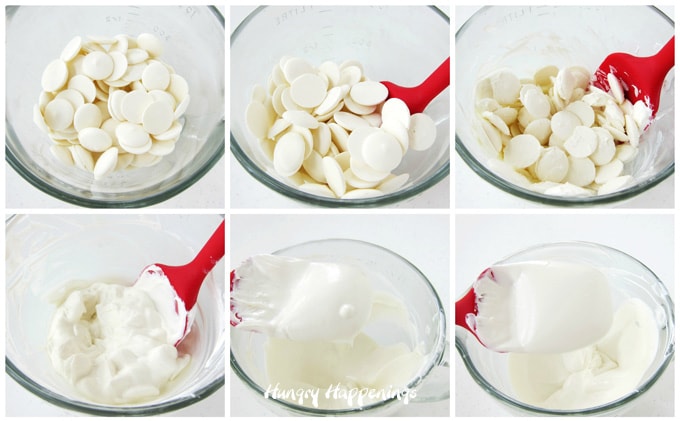
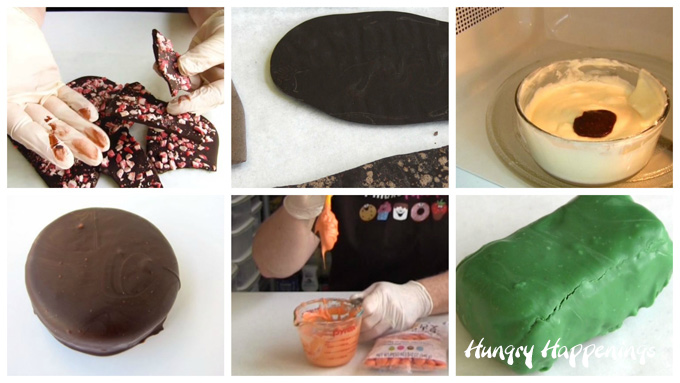
Every microwave is different so this is just a guideline, but it is safest to go slow and stir often. I always use high power for short busts of time. Pour 16 ounces chopped chocolate or confectionery coating wafers into a microwave safe bowl. Heat on high power for 30 seconds, remove from microwave and stir. Your chocolate wont look melted much at all at this point (1), but if you don't stir it, you may burn the chocolate in the center of the bowl. Return to the microwave and heat for 25 seconds. At this point the chocolate will look only slightly melted around the edges (2) but if you stir vigorously the chunks will indeed start to become liquid (3).
Continue to heat for 20 seconds. Now your chocolate will look more liquid (4), but you will have chunks remaining. Stir vigorously and the heat from the melted chocolate will indeed melt the chunks (5). If, after stirring for a while you still have chunks of chocolate remaining (6), heat for 10-15 second intervals, stirring in between each until melted (7). Do not rush this process. Chocolate burns easily. If you do burn the chocolate, throw it away and start over in a clean bowl.  To melt more than 16 ounces, you can increase your times by 10-15 seconds per interval. For 2 lbs. (45 seconds, 35, 25, 10). For 3 lbs. (60 seconds, 45, 30, 20). If your microwave is less powerful, increase the times, but go slowly. If, once melted, your confectioner coating is really thick, add vegetable oil a teaspoon at a time, stirring after each addition, until the coating is thin enough to work with. You can also purchase Paramount Crystals which are flakes of palm kernal oil that can be stirred into thick confectionery coating to thin it out. 

Melting Confectionery Coating in a Skillet:
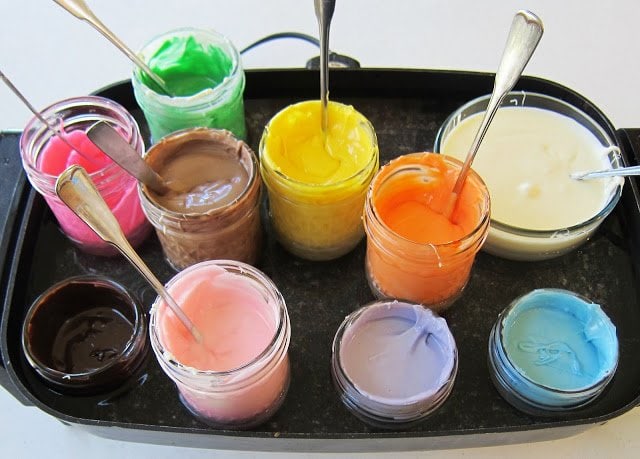
If you are planning to make a lot of chocolates using various colors of confectionery coating, then melting them in a skillet is a great option. Fill your skillet with some warm water.  Fill glass jars, coffee mugs, or ramekins with the confectionery coating wafers.  Place jars in water in skillet. Make sure the water comes up about half way on your shortest jar. Turn the heat to the lowest setting and allow the wafers to melt, stirring occasionally. You can keep your coatings melted all day using this method.  Just be sure to replenish the water as it evaporates and be careful that you don't spill water in the chocolate, or it will be ruined.

Coloring Confectionery Coating:
Confectionery coating wafers are available in a rainbow of colors and even various flavors.  Most colored wafers taste like vanilla, but there are mint, fruit, peanut butter, and butterscotch flavors available.  If you need a large amount of one color or need dark red or green, I suggest buying the pre-colored wafers. If not, then just melt down white wafers and color them yourself.  You need to use colorings that are specially formulated for chocolate.  Standard grocery store food coloring is water based and it will not work. Gel, paste, or powdered colors will work to beautifully color your confectionery coatings.  These colorings are easy to find at craft and cake decorating stores. If you are using colorings in a squeeze bottle, squeeze in a small amount of coloring at a time and stir well.  Add more coloring if needed to achieve the desired shade.  Just a note, that some colorings are more vibrant than others.  Pink for instance is very vibrant.  Add one drop at a time. You can always add more, but the only way to tone down a color is to add more chocolate. If you are using candy coloring (icing coloring) from a  jar, stick a toothpick into the jar, pull out some coloring and stir it into the candy coating. DO NOT put the toothpick back in the jar of coloring or you will contaminate the coloring. Use a new toothpick every time you want to get more coloring. If you add coloring and your coating becomes thick, add a small amount of vegetable oil or some Paramount Crystals stirring after each addition until thin and smooth.

MODELING CHOCOLATE (CHOCOLATE CLAY) RECIPES:
I created these calla lilies out of
white modeling chocolate.

Modeling chocolate or chocolate clay can be used like fondant to decorate and cover cakes or it can be used as a sculpting material to create forms and shapes. I personally think modeling chocolate tastes much better than fondant and use it almost exclusively. I love working with modeling chocolate and find that almost anything you can create with polymer clay, you can also make using modeling chocolate. It will harden when left at room temperature to dry, but can still be eaten once hardened. You can purchase pre-made modeling chocolate, but it only requires two ingredients, and is very simple to make.

You can use pure chocolate for this recipe without having to temper it or you can use confectionery coating.  I use pure milk and dark chocolate, but use white confectionery coating to make my modeling chocolate.  The pure milk and dark chocolate have a richer flavor than the coatings but I actually prefer the taste of the white confectionery coating in this application and it is much less expensive than pure chocolate.  Use your judgement when selecting a chocolate for this recipe.  You will definitely taste the chocolate, so choose what you like to eat. *Every chocolate has different amounts of fats and sugars so this recipe is a guide. Some chocolates will require more corn syrup than others. Also, the moisture in your room can also effect the moisture in your modeling chocolate. See the troubleshooting section below for instructions to solve problems with your modeling chocolate. 

Chocolate bucket
decorated with modeling
chocolate.
Modeling Chocolate Ingredients:

White Modeling Chocolate:
16 ounces white chocolate
1/3 cup light corn syrup (add more if needed)*

Dark Modeling Chocolate:
16 ounces semisweet chocolate
1/2 cup light corn syrup (add more if needed)*

Milk Modeling Chocolate:
16 ounces milk chocolate
1/3 cup light corn syrup (add more if needed)*

Modeling Chocolate Instructions:


Melt chocolate or confectionery coating (1).  Allow the chocolate to cool to about 91 degrees Fahrenheit, stirring often.  If you add the corn syrup when the chocolate is too hot, the cocoa butter or oil will rise to the surface and you will have a greasy mess. (See trouble shooting below.) If you don't have a thermometer, test the temperature of the melted chocolate by putting a drop on your lip. It should feel cool. If it's hot, let it cool longer. Pour in corn syrup (2). Stir until well incorporated (3)

  
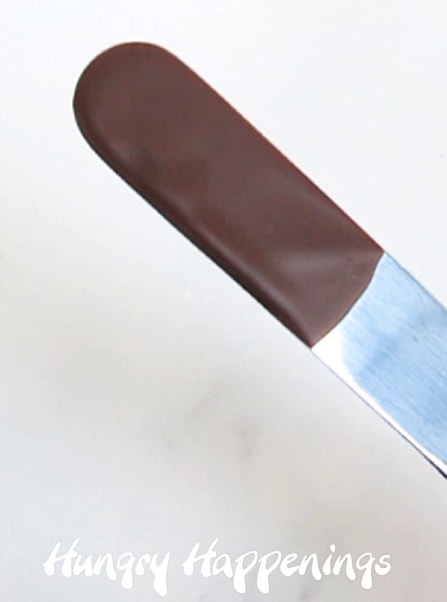
The mixture will become thick very quickly, so scrape the bottom of the bowl to incorporate all of the melted chocolate (4). Pour mixture out onto a counter top, preferably marble or granite (5) . Knead until glossy and smooth (6). My hands tend to be rather warm, so I use a plastic bench scraper to help me knead the modeling chocolate, so that I don't over heat it as this can bring out the oils in the chocolate. Store the modeling chocolate wrapped tightly in plastic wrap and placed in a zip top bag or airtight container.  Modeling chocolate will keeps for several  months, if stored properly.


Trouble shooting - How to fix dry or greasy/oily modeling chocolate:

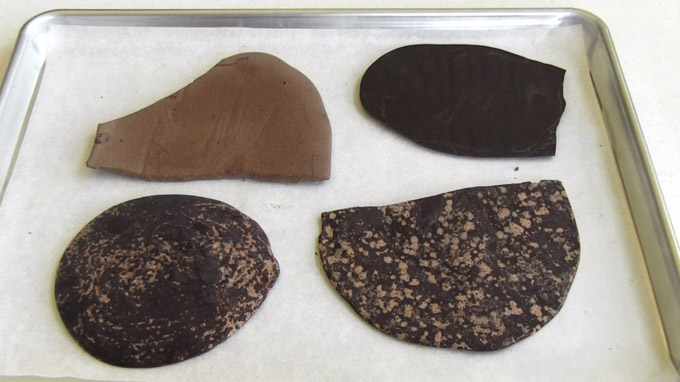
Dry modeling chocolate:  As I mentioned, all chocolates have different amounts of fat in them.  That is why these recipes may need some adjustments.  If you are kneading your mixture and find that it is crumbling and dry (A), then you will need to add some corn syrup.  Pour on a small amount of corn syrup and mix it in (B). If you begin to knead the mixture and it still feels dry, add some more corn syrup and continue to knead until the mixture becomes smooth and soft (C).  Just a note, that if you are working on granite or marble, the surface is cold which is great for kneading this mixture. If, however, you are in the middle of kneading the mixture, and you walk away, when you return, you may have hardened bits of chocolate stuck to the granite or marble.  These hardened bits may not melt back into a smooth dough.


Oily modeling chocolate: There are several reasons you may end up with oily modeling chocolate (D).  First, if your chocolate is too hot when you add the corn syrup the oils may separate from the chocolate.  I recommend you allow your melted chocolate to cool to around 91 degrees Fahrenheit before adding the corn syrup.  Second, you may be working in a warm room or have warm hands.  As you knead the mixture, the warmth will begin to bring out the oils in the chocolate. I use a plastic bench scraper to knead because I have warm hands (E). and I knead my mixture on a granite slab to keep it cool, even if my room is warm (F).

If you do find that you have oily modeling chocolate, all is not lost. Don't just wipe up all the oil and get rid of it. You do want to get that oil back into the chocolate, or your modeling chocolate will end up being brittle as it dries.  You will need to continue to knead the chocolate until all of the oil is absorbed back into the chocolate. This can take a while, but don't give up. Eventually it will become smooth and glossy (G) . You may need to try one of these techniques to make this work:
  • Move the chocolate to a cooler work surface like granite or marble.
  • Dip you hands in ice water to cool them down and continue to knead.
  • Use a plastic bench scraper or a rubber spatula to knead instead of your hands.
  • Scape up the mixture and set it on plastic wrap for about 2 minutes allowing it to cool slightly. Then remove from plastic wrap and continue to knead. If you allow it to just sit directly on your work surface, you may end up with hardened pieces of chocolate that will not blend in to the mixture.
Sticky, Soft, or Wet Modeling Chocolate: You may find that you have added too much corn syrup or too much coloring and that your modeling chocolate is just too sticky, soft, or wet.  If it is sticky, wash your sticky hands then continue to knead until all of the corn syrup is incorporated.  Take the sticky, soft, or wet dough and roll it in a ball then flatten it out in a disc. Then wrap it in plastic wrap and allow it to sit for at least an hour so that it can dry out a bit before using. If it is really wet, allow it to dry at room temperature until workable.  As a last resort, you can try to knead in some melted chocolate, but you can end up with hard clumps of chocolate or an oily mess. Drying is your best option.

Hard Modeling Chocolate: Your modeling chocolate will harden as it ages. Always keep it formed into a flat disc and keep it wrapped tightly in plastic wrap in a zip top bag or airtight container. Even if you do this, you will find that your modeling chocolate is fairly hard when you go to use it after it has been stored for a few days.  You can break off a piece of modeling chocolate and hold it in your hands for a few moments in order to warm it enough to begin kneading.  Knead it until it becomes workable.  If you just can't get it soft enough, place a hunk in the microwave and heat on defrost for 3-5 seconds.  Remove and knead it carefully (there will be hot spots and you can burn your hands, so be cautious.)  The modeling chocolate may become oily if you do this and you will have to follow the instructions above to fix the oily mixture.

Coloring Modeling Chocolate:
White modeling chocolate can be colored using paste food coloring or powdered food coloring. I have even had success using store bought liquid food colorings, however the modeling chocolate becomes very soft and doesn't harden as well.  I recommend using food handling gloves when coloring modeling chocolate, or you will end up with brightly colored hands that may take days to return to normal. If you need a large amount of any one color, you can make the modeling chocolate recipe using colored confectionery coating wafers.

Coloring Modeling Chocolate using Paste Food Coloring:
Add a drop of color to the modeling chocolate and knead until well blended.  Add more drops of color until you reach the desired shade.  Remember, you can always add more coloring, but you can't take it out, so add drops slowly then knead and check the color before adding more.


Coloring Modeling Chocolate using powdered food coloring:
Sprinkle a small amount of coloring onto the modeling chocolate and knead until well blended.  Add more color as needed to get your desired shade.  I prefer to use powdered coloring for red and green, as I can get a more vibrant color that way.

To Store Modeling Chocolate: Wrap tightly in plastic wrap and store in a zip top bag or airtight container. It keeps for months if stored properly. If it becomes hard, break off small pieces and knead until soft.  If you can't do that, place the hard modeling chocolate in the microwave and heat on defrost for 3-5 seconds. Remove and carefully knead.  It can be very hot, so proceed with caution.

To use Modeling Chocolate:
Chick made from modeling
chocolate in a hand made
chocolate egg sitting on a
chocolate pretzel nest.
Simply pinch off pieces of modeling chocolate and sculpt into shapes.  If you have a hard time working with the modeling chocolate because it is hard, warm it in your hands and knead until it is pliable.  If it is too, soft, wrap it in plastic wrap and allow it to cool down for a while before using.

Modeling chocolate can be rolled thin using a rolling pin or a pasta machine.  Dust your work surface or the rollers on the pasta machine very lightly with powdered sugar for white chocolate, milk, and colored chocolates or dust it with cocoa powder for dark chocolate to keep the modeling chocolate from sticking. Cut the modeling chocolate using a pizza cutter, knife, or cookie cutters. You can even mold the modeling chocolate using silicone molds that are dusted with powdered sugar or cocoa powder.


Have fun working with this recipe.  I will use it often in recipes, so check my recipe page for ideas.

HOW TO HAND PAINT LOLLIPOPS USING CONFECTIONERY COATING/CANDY MELTS

LOLLIPOP RECIPE
Ingredients:

Confectionery Coating/candy melts  in white, milk, dark, and colored varieties
  • (each small lollipop will take approximately 1 ounce of candy and larger pops will take about 2 ounces, so purchase your coatings according to the number of lollipops you would like to make)
candy coloring (you can not use grocery store variety food coloring to color the candy)
lollipop sticks


Special equipment needed:

electric skillet (this will make this process so easy)
glass jars, coffee mugs, or glasses
paint brushes (use new or food only brushes, I recommend plastic handle brushes)
candy molds

Notes:
  • Most white candy melts have a cream or slightly yellowish tint. When you add coloring to this coating, you wont get a pure color (ex. - blue will have a slight green tint.) If you want a pure white candy melt, Guittard makes a really vibrant white wafer, called Vanilla Apeels. Just note that it is  a very sweet product.
  • For some reason white candy melts that are colored with pink candy coloring tend to fade over time (meaning a few days), so I always buy the pink colored wafers. These colored wafers come in a very vibrant pink, so I tone them down by mixing them with white candy melts to make varying shades of pink. 
Instructions:

You will need to melt and color your confectionery coatings using any of the methods listed above. When I am making a lot of lollipops I use an electric skillet filled with warm water to keep small jars of colored chocolate melted.  That way I don't have to continually re-melt my candy. I usually make a lot of lollipops at one time, so I melt a big bowl of white coating in the microwave, then pour the melted coating into small jars and color them. If I'm only using a small amount of colored candy melts, I will just melt them in a jar in the skillet.

Melting Confectionery Coating in a Skillet:
Fill your skillet with some warm water and set the temperature to "WARM".  Fill glass jars, coffee mugs, or ramekins with the confectionery coating wafers.  Place the jars in the water filled skillet. Make sure the water comes up about half way on your shortest jar. You can keep your coatings melted all day using this method, just stir the coating throughout the day to keep the coating near the top of the jar from hardening.  And be sure to replenish the water as it evaporates. Most importantly, be careful that you don't spill water in the chocolate, or it will seize up and become too thick to use. So, if you pick up a jar to move it closer to you, put a towel under the jar as you move it, so drops of water don't end up in other jars of coating.
Coloring Confectionery Coating:

Pour some melted white coating into a jar.  Squeeze in some candy coloring (start with a drop or two if you aren't familiar with the strength of the coloring.) Stir. If you are using candy coloring (icing coloring) from a  jar, stick a toothpick into the jar, pull out some coloring and stir it into the candy coating. DO NOT put the toothpick back in the jar of coloring or you will contaminate the coloring. Use a new toothpick every time you want to get more coloring.

If you add coloring and your coating becomes thick, add a 1/4 -1/2 teaspoon of vegetable oil or some Paramount Crystals stirring after each addition until thin and smooth.


Create all of the colors you want to use in your lollipops. For Easter, I like to use pastel colors for some of the pops and more vibrant colors for others.  You can adjust colors while you are working by adding more coloring (for brighter colors) or by stirring in some white candy coating (for more pastel colors). Get your candy molds and paintbrushes together and clean our your freezer, so you have some space to place the molds. Before you begin painting, decide what colors you want to use for the features and what color you want for the background. If you choose to make a white bunny, do not paint any of the features white, as they will just blend into the background color.


You can paint all or just some of the features on your mold.  Here I started by painting the mouth with bright pink coating. Dip a paintbrush into the coating and dab it into the indentation on the candy mold. Add more coating to your brush as needed to fill in the entire indented area.

By dabbing the chocolate (as seen at the top of the picture) you will end up with a nice opaque area. If you brush the chocolate on (bottom of picture), it will harden, streak, and leave you with a see-through area.   Also, always dip your brush down into melted chocolate and not along the sides of the jar, to pick up nicely melted chocolate. If you end up with hardened chocolate on your brush, just dip it in the melted chocolate and allow it to sit for a minute to melt away the hardened chocolate from the brush. 
 

Using a different paint brush for each color, paint more details on the candy mold. I used a lighter pink for the bunny's  nose and milk chocolate for the eyes. I wanted to create a layered effect for the bow tie. In order to layer the colors, I first painted on the yellow polka dots, then put the mold into the freezer for 2-3 minutes to harden the yellow dots.


When you remove the mold from the freezer, it will be very cold and look very cloudy.  Allow it to warm to room temperature before proceeding.


For the areas that require two colors, paint the next layer of color directly over the first layer.  I painted purple on top of my yellow polka dots.  Carefully turn the mold over and look to see if you have covered the entire area. I have a bit of purple yet to paint onto my bow tie (see the lower right side of the bow.)  After fixing the bow tie, I painted the ears (not shown) then put the candy mold back in the freezer for a few minutes.

Before filling the mold, allow the mold to warm up to room temperature.  Then spoon whatever colored coating you've decide to use for the background into the mold.  I usually spoon some in, then tap the mold gently on the table, allowing the candy coating to spread and fill in areas like the ears.  It's best not to overfill the mold, so tap as you go. Once the mold is filled, you need to tap it on the table a few times to remove any air bubbles that may have formed.

Notes: 
  • Don't fill in the indentation that is for the lollipop stick.
  • If you do overfill your mold, you can use your finger to wipe off the excess candy or wait until the candy is hardened and you will be able to shave it off with a knife.


Add a lollipop stick by setting the stick in the indentation and gently pressing it into the candy.  Use your finger to roll the stick around so it gets completely coated in the candy. 

Place the lollipop in the freezer for 5-8 minutes. It may take a bit longer, if you are opening and closing your freezer a lot during the process.

As the candy coating cools and hardens it will shrink slightly and retract from the mold. You can tell if the lollipop is hardened by carefully holding the mold up over your head and checking to see the the candy is one even color.  If you see dark spots, that means the candy is still wet in those areas.  Freeze the candy a few minutes longer. You can also check to see if the lollipops are ready by very gently tugging on the lollipop stick.  If the chocolate moves, it should come out of the mold easily.  If it sticks, it is not ready.  Don't tug too hard, or you may pull a lollipop out before it is completely hardened.


 To un-mold your candy, you have a few options
  • Gently tug on the stick and pull the candy out of the mold
  • Place your hand over the candy, turn the mold upside down and allow the candy to fall out of the mold into your hand.
  • Place a baking sheet over the candy, turn the mold and the baking sheet upside down allowing the candy to fall out onto the baking sheet.

If you have overfilled the candy mold and the lollipop has excess chocolate around the edges, allow the candy to warm up to room temperature. Then use a small knife to carefully cut off the excess candy. If you have a lot of excess chocolate and it is very thick, you may want to heat up your knife by running it under really hot water (then drying it) or by holding the knife blade over a flame. Then as you cut off the excess the knife will melt the chocolate, as you go, making it easier to remove. Brush off any crumbs using a pastry brush.


Store your lollipops in a cool place preferably in an airtight container. You can package them in clear cellophane bags and tie them with a colorful bow.

I oftentimes will paint my candy molds with this colored candy coating, then fill the molds with pure tempered chocolate. Sometimes the painted features pop off, but for the most part it works. If you are using pure chocolate, you can also melt cocoa butter, color it, and paint it into the molds before filling them with the tempered chocolate.  You can also purchase colored cocoa butter, but the quantities may be greater than you need. You can keep your jars of melted cocoa butter in a water bath, just make sure the cocoa butter doesn't get too warm.

MY CHOCOLATE GALLERY

I have been making and designing chocolates for over 30 years.
Scroll down the page to view some of my favorite chocolate creations.
Handmade Chocolate Leaf Box filled with chocolate bark,
caramel nut clusters, buckeyes, and logo chocolates.

Handmade Chocolate Star Box filled with chocolate truffles,
dipped pretzels, and logo chocolate pieces.

Handmade Chocolate Tree Box filled with chocolate truffles,
dipped pretzels, company ovals and a logo candy bar.

Monster Movie Chocolate Bucket filled with white chocolate popcorn
drizzled with black and orange chocolates. This bucket
 is decorated with edible monster movie images.

Halloween trophies made from dark chocolate and
decorated with gold luster dust.


Thank You Kitchen Designs Chocolate Bucket. 
This bucket was designed as a gift for Sara Moulton
using modeling chocolate shapes.

Corporate Chocolate Bucket filled with
white chocolate popcorn drizzled in milk chocolate. 
Decorated with an edible image.

Small chocolate bucket filled with chocolate dipped
pretzel sticks.  Decorated with an edible logo image.

Chocolate Egg Decorated with edible luster dust and opal dragees.
Filled with chocolate truffles.


Decorated chocolate eggs filled with dark chocolate truffles.


Hand painted Easter chocolates.

Chocolate Calla Lily Bouquet.  These beautiful calla lilies are
sculpted out of modeling chocolate and arranged in a
vase filled with green colored white chocolate leaves.


QUESTIONS/COMMENTS

If you have any questions or comments relating to chocolate and these recipes please leave them below and I will answer them as soon as I can. Just know that I monitor my comments, so your comment wont appear until I have read it.

Up until recently there wasn't a way, that I was aware of, to add commenting ability on this page, so many people asked questions and I provided answers on one of my chocolate making tutorials. There were a lot of great questions  asked and some answers that might help you if you are having trouble. I suggest you check them out, here.

99 comments:

  1. I usually get by when working chocolate into my projects. I've never really thought about what the differences were in products, I just follow the recipes I find. Thank you for explaining all of the chocolates! I now understand why I've had difficultly sometimes. This is a great resource that Im going to share with friends :)

    ReplyDelete
  2. This is so helpful. Thank you for sharing your knowledge and also for providing an alternative recipe for people in England who don't have corn syrup. Your troubleshooting section is excellent. Thanks again

    ReplyDelete
    Replies
    1. I cannot find the alternative to corn syrup. Could you point it out or post here to tell me? Thanks!

      Delete
    2. In the UK we use Liquid Glucose, if that helps.

      Delete
  3. Thank you very much for all this information, pictures and helpful tips. Love this!!
    Just brilliant!
    Disa from Iceland.

    ReplyDelete
  4. Thank You so much. I have tryed the candy molds last year and said never again because of the work involved in keeping it warm enough to work with. Water in the skillet is a great idea. I will be trying that idea out. thanks again

    ReplyDelete
    Replies
    1. I've made tens of thousands of painted chocolate pieces in my lifetime and have been using the skillet the whole time. I can't imagine making them without it. It's worth the $20 investment.

      Delete
  5. Thank you for sharing all your awesome knowledge. I will most definitely be tring the skillet idea once I steal the electric skillet frommy mom..lol

    ReplyDelete
  6. Love all the tips AND the pictures - will be coming back here to read more when I have some free time! Tara Lidell

    ReplyDelete
    Replies
    1. Hi Tara,

      I have successfully used honey, dulce de leche, and rootbeer flavored ice cream toppers. Here are the links the recipe posts:

      http://www.hungryhappenings.com/2011/05/how-to-create-school-books-using-corn.html

      http://www.hungryhappenings.com/2011/06/celebrate-end-of-school-year-by-making.html

      Delete
  7. Could I use my crock pot in place of the skillet? I'm going to be dunking about 100-150 cake pops and cheesecake pops, but I don't have an electric skillet. Thanks- Stefanie

    ReplyDelete
    Replies
    1. Hi Stefanie, as long as you fill the crock pot with water then set jars or bowls of candy coating in the water, it should work. Crock pots are usually quite a bit taller than a skillet, so it will be more challenging to work with, but I do think it will work. Let me know how it turns out. God luck with your cake pops.

      Delete
  8. Thanks so much with a quick response! I'm doing as much homework as I can before hand! I'm planning a trial run this coming week, I'll let you know how it goes! You really do clean, beautiful work! Again, Thank you! -Stefanie

    ReplyDelete
    Replies
    1. Thank you! I hope it all works out for you and that you have fun with your project.

      Delete
  9. Hi.. i made some chocolate lollipops... It is good. my problem is when i am trying to pack them and put some ribbon... it became greasy.. So what i do... I will put them back on the fridge... so it will set again... What should i do? I need your help... Thank you.

    ReplyDelete
    Replies
    1. Hi, the problem you are having is that condensation has built up on your lollipops. They were in the freezer for too long, and they get sticky or wet when that happens. There is nothing you can do about this, other than let them sit at room temperature until they completely dry. They will have a bit of a texture once dry, because the beads of condensation will dry but wont really go away. You should only leave your lollipops in the freezer for about 5-10 minutes, until set.

      Delete
  10. Your post on the modeling chocolate is so sooooo helpful. I made it using dark chocolate and was very excited to use it but somehow ended up not using it and it's been in the fridge for quite a while now. I definitely don't want to use it for any cakes now since its been so long but I thought I could some how use it to just practice roses. It has bloomed a lot sitting in the fridge. It was pretty hard and so I cut it into pieces literally hammering the knife. I tried to soften a couple pieces but they are crumbling big time and oil starts to show through a bit while I try to knead it. Is there a way to recover it at all? Or should just discard it and try making new one again....just didn't want to waste it :(

    ReplyDelete
    Replies
    1. I don't ever refrigerate my modeling chocolate. I just wrap in in plastic wrap or a zip top bag and store it in a Rubbermaid or Tupperware container. Modeling chocolate by nature will harden as it sits and will definitely harden if it's cold. You can certainly use it to practice with, you'll just need to get it to soften up. You can microwave it on DEFROST for a few seconds, then try to knead it. Then into the microwave again for a few seconds on Defrost then try to knead it. You do not want to get it so hot that it really begins to melt, or you'll end up with a greasy mess. You can also put it in a zip top bag and set it in a bowl of room temperature water, not hot or warm water. Try to knead it after a while. You should be able to salvage it, at least to practice with. Taste it, and if it tastes good, and you get get it softened and workable, then by all means use it for a project. Good luck.

      Delete
  11. Your post on the modeling chocolate is so sooooo helpful. I made it using dark chocolate and was very excited to use it but somehow ended up not using it and it's been in the fridge for quite a while now. I definitely don't want to use it for any cakes now since its been so long but I thought I could some how use it to just practice roses. It has bloomed a lot sitting in the fridge. It was pretty hard and so I cut it into pieces literally hammering the knife. I tried to soften a couple pieces but they are crumbling big time and oil starts to show through a bit while I try to knead it. Is there a way to recover it at all? Or should just discard it and try making new one again....just didn't want to waste it :(

    ReplyDelete
  12. This is an excellent article on molding chocolate!!! I love it, thank you!

    ReplyDelete
  13. I made rum balls but the chocolate coating kinda melts (sticky) the moment i took them out from fridge. What shall i do?

    ReplyDelete
    Replies
    1. Hi Hermes,

      The reason your chocolate is sticky, is that it probably wasn't tempered correctly. When working with chocolate that has cocoa butter in it, you must work using exact temperatures. You need to melt it and heat it to 100-115 degrees fahrenheit then it needs to be cooled down to 88-91 degrees, depending on the type of chocolate (dark is usually 90-91 and milk and white are 88-90.) There are several different tempering methods and you can do an on-line search to find all sorts of resources regarding tempering chocolate. There are lots of videos too. I have two machines that temper my chocolate for me, that is why I didn't add tempering directions here on this page. I don't feel I'm an expert at it, being my machines do all the work for me. Good luck.

      Delete
  14. hi beth! great article! very helpful!! thanks....
    ib been trying to make chocolate bouquets,,, i bought merkens chocolate buttons.... melted them and put them in molds... freezed for a short while just till set and took them out... waited till room temp and then tried to wrap them,,,but they were still slightly melting in my hands...
    what can i do abt that? i want to wrap them in colored foils and make a bouquet so i cannot refridgerate them, becuse i need to gift them out. pls help...it would be greatly appreciated. it is happening becus i live in a warm place like panama? if so what can i do? and how to store them till i gift them out?

    ReplyDelete
    Replies
    1. Hi,

      Did you use merkens pure chocolate with cocoa butter in the ingredients or their confectionery coating with hydrogenated oil in the ingredients? If you used the first, it needs to be tempered in order to set up properly. If it isn't tempered then it will always be soft, it will never harden properly. If you used the confectionery coating and it pops out of the mold but later feels soft, it has gotten too warm. The only thing you can do is to cool your room where you are working. It's best if your room is between 65-70 degrees Fahrenheit, but that is a bit chilly for most, so 70-74 degrees would be alright. Anything above that, and you will have trouble with your candied melting. I never suggest refrigerating candies, as they will develop condensation, but if you just can't get your room cool enough, you may need to store them in a refrigerator, just be aware that they will become a bit wet upon removal.

      Delete
  15. Sorry it took me a fat min. to get back to you! The baby shower went really well. I made 55 cake pops, and 55 cheesecake pops. The crock pot worked like a charm! Thank you so much for all the tips! I'm not sure I would have had such a good outcome otherwise! If I knew how to post a pic. I'd show off a little...:) Thanks again! Stefanie

    ReplyDelete
    Replies
    1. So glad to hear it worked and that everything went well :)

      Delete
  16. Hello :) I was wondering if I could decorate sugar cookies using melted chocolate instead of icing? I love you tutorials and use them often.

    Nina

    ReplyDelete
    Replies
    1. Hi Nina,

      Yes, you can decorate with melted chocolate. You can pipe on designs, just be aware that it is a bit more challenging to pipe than icing as it will run a bit more. One suggestion would be to pipe your design onto a piece of parchment paper then add the design to your cookies once it has set. I might just do a tutorial on that technique!

      Good luck and have fun.

      Delete
  17. Thanks so much for your help Beth! How do you attach the design to the cookie after it dries on the paper? Thanks again!

    Nina

    ReplyDelete
    Replies
    1. Just pipe a bit of melted chocolate onto the cookie and press the design down onto the cookie.

      Delete
  18. I was looking at the pictures of your favorite creations. I love your packaging! Is the egg also chocolate? If so how did you get the two hollow halves to fit so perfectly?

    ReplyDelete
    Replies
    1. Hi, Yes the egg is chocolate decorated with luster dust. I use plastic molds that were made to create sugar eggs and the two halves line up perfectly. I bought the plastic eggs years ago.

      Delete
  19. I am playing with candy melts and chocolate chips. I really want to infuse coffee into my chocolate. I don't want to use coffee grounds or add a ganache to the center. I was thinking of adding instant coffee grounds to melted shortening, then adding the shortening to the melted chocolate. Is this a feasible idea or would this leave the chocolate to soft to harden properly?

    ReplyDelete
    Replies
    1. You wont be able to add shortening to the chocolate, but you can just stir in the coffee grounds. Make sure you use really good quality coffee. I have done that before with a lot of success.

      Delete
  20. Thank you for your timely responses! I find that to be as impressive as your fantastic chocolate creations. I plan on trying it tomorrow. If all goes well I will send them in a care package to our church's college kids.

    ReplyDelete
    Replies
    1. I was thinking back to a bark I used to make - I spread dark chocolate in a thin layer, sprinkled on some coffee, then drizzled on some milk chocolate. It looked pretty and the coffee lovers really enjoyed it. Just be sure to package it separately as it will be very aromatic.

      Delete
  21. Oooo... That sounds lovely! Coffee is one of my favorite aromas. Was that instant coffee grounds or brewed coffee? I found a recipe for coffee syrup the other day. It's similar to chocolate syrup. You mix it with hot or cold milk to make a coffee beverage. By itself it might make an interesting center to a dark chocolate candy. I'm afraid the concentrated coffee flavor would be to strong for a milk chocolate. I'll admit, that although my palate is very limited, planning flavor profiles and combinations is a lot of fun to me. Now I just need to get in the kitchen and explore them.

    ReplyDelete
    Replies
    1. I sprinkled on ground coffee, that I ground myself from fresh beans. Use a really good quality coffee. I too love playing with flavors and understand your desire to experiment!

      Delete
  22. Hi - this is a brilliant site. If you are making chocolate shapes using a silicone mold does it matter if you leave the cholocate to harden at room temperature or is it best to refrigerate? Thanks

    ReplyDelete
    Replies
    1. Thanks! If you are using pure chocolate (with cocoa butter in it) then you can leave it at room temperature to set. I use the refrigerator just to speed up the process. If, however you are using candy coatings (with palk kernal oil or some other oil) then you do need to freeze them so that you don't end up with spotting or streaking in your candies.

      Delete
  23. Hi,

    I just got connected to your blog and found it to be a HUGE help in understanding and working with chocolate. I started experimenting with it about 2 years ago and done small things but now I am ready to up the challenge. Is there a way to infuse flavors into the chocolate without messing up the setting process? and where do I find these flavors and can you give me some flavoring ideas? I usually use Ghiradelli's chocolate blocks that I buy in bulk don't know if that will help to know what kind of chocolate I usually work with. I don't particularly like to work with the colored wafers because they lack flavor in my book and seem to have a waxy after taste. I just use the White Ghiradelli chocolate and use the chocolate coloring to make the colors I want. I also love the idea about the water in the skillet and using jars, that will help sooooo much, I hate running out of bowls.. LOL

    Tami from Missouri

    ReplyDelete
    Replies
    1. I love working with pure chocolate and agree that the flavor is so much better, but find most home cooks prefer using the confectionery coating because it is so easy to work with, so I do a lot of projects using them. For the most part, if you can temper chocolate you can always swap out pure chocolate for the candy melts in any of my projects. As far as flavoring goes, Lorann Oils does make an oil specifically for chocolates. If you click on this link, you'll go to Amazon and see the Irish Cream Chocolate Oil. http://www.amazon.com/gp/product/B000MS69CS/ref=as_li_tf_tl?ie=UTF8&camp=211189&creative=373489&creativeASIN=B000MS69CS&link_code=as3&tag=hungryh-20

      LorAnn makes quite a few flavors of chocolate oils like Royal Raspberry, Kona Coffee, Orange Brandy, and Canadian Maple. I have tried these, and they have really good flavor. Don't use LorAnn hard candy oils, they wont work well in chocolate. You can't use anything that has any water in it either. Dry spices work well too. You can use wet ingredients when you are flavoring chocolate truffles. Fruit purees are great as are things like Rum, Frangelico, etc.

      Hope this helps. Have fun and let me know if you have any more questions.

      Delete
  24. What a great webpage you have here! You are obviously a perfectionist, as am I, and you need to be to turn out the fussy little details which I love! I don't know what to try to make first! Thanks for inspiring me.

    ReplyDelete
    Replies
    1. Oh, I am totally a perfectionist. Some days that's a great thing, others, not so much. I spent 9 hours yesterday working on a recipe that I had been thinking about for over 6 months. It had to be perfect, and I had a few failed attempts early in the day before I got my perfection! I'm glad you can understand and relate:)

      Delete
  25. I have had recent problems with my modeling chocolate but all otger web resources have been vague or contradict each other. This page has by far been the most helpful yet and will definitely be bookmarked!

    ReplyDelete
    Replies
    1. Thanks Sunni. I'm glad I can be of help. I've encountered so many issues with modeling chocolate over the years and have learned how to fix every problem. I hope you now have the knowledge you need to be successful in making modeling chocolate.

      Delete
  26. Hi, i'm new to chocolate making, I've tempered some chocolate and used some just poured over some ginger which looked fine but then i poured the same chocolate into a silicone mould and these all went cloudy. Any advice on why the silicone went cloudy and the poured over didn't. Thanks

    ReplyDelete
    Replies
    1. There can be a number of factors involved here. It could simply be that by the time you poured the tempered chocolate into the molds it had cooled down to a point that it was no longer in temper. It is tricky keeping hand tempered chocolate in perfect temper while you are working as you only have a few degrees to work within (which depends on the chocolate you are using but is usually somewhere between 88-91 degrees Fahrenheit.) If the silicone mold had any residue in it that can effect the look of the chocolate as well. If the mold was cold or warm it can effect the outcome as well. I'm sorry I can't give a specific reason for your problem but I hope this helped. I suggest you keep an eye on the temperature of the chocolate at all times. That's the most important thing. If needed warm the chocolate back up by using a blow dryer to warm up the bowl (don't blow into the chocolate, rather around the edge of the bowl.) Just warm it briefly as you are just trying to raise the temperature a degree or two.

      Good luck.

      Delete
    2. Karen, here is an explanation from a chocolate maker that is really well written. His comments where in response to someone having trouble with hand tempering.

      Hand tempering is difficult because building the correct crystal structure can be thrown off by many things. Two things that are crucial to tempering are temperature and moisture. Assuming you have the precise recommended temperatures for the kind of chocolate you are using, the moisture level in your environment is most likely the culprit. Moisture in the air(too much or not enough)can be a challenge when working with chocolate(and that factor changes day by day because of weather, heating, etc). I'll explain: imagine a tinker toy tower designed by a 5 year old child; he/she manages to get a tower together upright on Monday. Give the same 5 year old the same pieces on Tuesday thru Friday; the tower will stand 5 different ways likely looking as if it will fall at any moment. This is what much of the tempering out there looks like. All the variables will work on any of the five days but if the conditions change, it may not work like the day before. So too with CHOCOLATE. There are six beta crystals one needs to place in order to temper and, like the toy tower, various conditions in your space will dictate which crystal could become out of joint. If only 4 crystals are lined up no temper will result; If 5 crystals, maybe or maybe not; but 6 Crystals = perfect temper every time. (By the way, the line up for each crystal is temperature; exact temperature is essential.) Use a thermometer if your business depends on it. People spend years to perfect this science so don't become discouraged. A dehumidifier might also help if you have too much moisture in the air, which is a common frustration. Good Science too you, Eric W. Case

      Delete
  27. I am glad I found your site. The information is so clear and detailed. Thank you.

    ReplyDelete
  28. Thank you for the detailed information provided about chocolates and their variations. Very helpful for a beginner.

    ReplyDelete
  29. Chocolate Calla Lily Bouquet!!!! I am so fancinated by this. Could you please send me the directions on how to make this beautiful bouquet.
    Thanks,
    Connie
    cmail64@msn.com

    ReplyDelete
    Replies
    1. Thanks Connie. I will do my best to work on a step-by-step tutorial for this project sometime this spring.

      Delete
  30. Hi Beth,
    I am planning on a chocolate making party for 9yr olds. Id like to add some colours but im confused about doing that. Do i buy white chocolate and liquid/powder colouring? or is the coloured chocolate a different product altogether?
    I here talk of 'candy' but not sure what that is comprised of and if it works with Chocolate (im in Australia)
    Kind regards,
    Sarah

    ReplyDelete
    Replies
    1. Hi Sarah,

      I'm not exactly sure what products are available in Australia, but if you are having children make candies, it will be much easier to work with confectionery (candy) coating than pure chocolates. Here in America we can buy the candy coating already colored or we can buy white coating and color it ourselves using candy coloring or powder coloring. You have to make sure any coloring you use does not have any water in it, so look for candy or chocolate coloring.

      If you use the confectionery coating, you can melt it using my instructions above. If you buy pure chocolate, you should temper it in order for the chocolate to set properly. Tempering can be very challenging, that is why I would recommend having the kids use the coating.

      I hope this answers your question.

      Delete
  31. Hi very thanks for the info and tips. I was wondering what brand of white chocolate you use for making modeling chocolate.

    ReplyDelete
  32. I use Peter's Chocolates for all of my professional candy making, but they aren't often easy to find for the home cook. If you have a cake/candy supply store in your area, you can ask if they carry the Peter's products. I tend to use the Peter's White Caps confectionery coating to make my modeling chocolate as I like the flavor. It does have a cream color instead of white. I have also used their pure white chocolate which has a really rich cocoa butter flavor but it is even more cream colored.

    Since Peter's is harder to find for most people, I tend to create a lot of my recipes for my blog using Wilton Candy Melts. They can be found in craft stores and in places like Walmart. The flavor is quite a bit sweeter than the Peter's but the advantage to it is that it is bright white.

    ReplyDelete
  33. Hi Beth. I found ur site while looking for help with keeping numerous colored chocolates warm for an extended period of time - great with the water bath concept! Thank u! I am about to attempt the project again, but wanted to hear what your thoughts are about using plastic "squirt bottles" instead of glass jars or bowls when keeping the chocolates warm and usable. I was thinking of maybe putting a dishcloth in the bottom of the pan to keep the plastic bottle from too much direct heat. Any advice? Thanks!

    ReplyDelete
    Replies
    1. Hi Mikol,

      I do use the squeeze bottles on occasion. The only thing I don't like about them is that the chocolate in the tip hardens and I have to clean it out constantly. If I'm doing something were I will use up most of the chocolate in the bottle quickly, I'll use them. If not, I use the jars. I do think you could keep the squeeze bottles warm by using the water bath in the skillet method. If you keep the skillet on the lowest setting, it shouldn't get too hot for the plastic bottles, but a dishcloth on the bottom is a good idea. Just be sure to dry the bottle each time you pick it up out of the water.

      If you try this, let me know how it turns out for you.

      Delete
  34. Hey, I just started playing with chocolate and decorations. Thanks for all the advices. Your work is amazing. I invite you to my blog:
    http://ausschokolade.blogspot.de

    ReplyDelete
    Replies
    1. I stopped by your blog. You've done some really amazing artwork in chocolate.

      Delete
  35. Wrapping Cakes with Chocolate? Any tips would be helpful -- such as how thick should it be -- how to attach to cake? Thank you, Susie

    ReplyDelete
    Replies
    1. Are you spreading a thin layer of chocolate on acetate then wrapping it around the cake or are you covering a cake in modeling chocolate?

      Delete
  36. Thank you for this fantastic tutorial. I just made a batch of modelling chocolate with Milk chocolate. The chocolate dough has come together,but the dough feels grainy and not very smooth. Also when I try to shape/knead the dough using my hand, the dough becomes soft and oily very quickly. Is this normal or have I done something wrong? Is it normal for some oil to be released when you are working with the chocolate dough while shaping it?

    Just some background info about the ingredients that I used. I am based in Hong Kong so candy melts aren't easily available here. I used a bag of milk chocolate discs that were labelled as "Compound Chocolate - used for decoration". I used locally made corn syrup that is not pourable at room temprature - you could hold the container upside down and nothing would drop out! So I had to warm up the corn syrup in the microwave to make it pourable, but it sets up and hardens very quickly so I had to add it to my melted chocolate while the syrup was still warm. Hope this info will help you to help me :) Thanks a ton! Look forward to seeing more wonderful posts from you. Regards, Anita

    ReplyDelete
  37. HI Anita,

    Compound chocolate is very similar to Candy Melts, as it contains cocoa, vegetable fat, and sugar and it will work fine in this recipe. You can also use any pure milk chocolate containing cocoa butter. The recipe will taste better when you use pure milk or dark chocolate, but coating work well too.

    I am not familiar with your corn syrup product, I think your problem is that the mixture got too hot because you had to warm up the corn syrup which is what causes the oil to seep out. Yes, it is normal for oil to seep if the modeling chocolate gets too warm. Wrap your modeling chocolate up in plastic wrap and allow it to sit at room temperature to cool for a while. Then try to knead it until smooth. If your hands are warm, then try to knead it on a marble or granite surface. If the modeling chocolate is still grainy I would usually suggest adding some more corn syrup, but you can't add it hot. Do you have any honey? If so, you could add a small amount of that and knead it in. Add just enough until the modeling chocolate becomes smooth.

    If you make this again, try to warm up your corn syrup so it's liquid, then let it sit to cool to 89-90 degree Fahrenheit (32 degrees C) before mixing it in with your chocolate. That should help.

    ReplyDelete
    Replies
    1. Hi Beth,

      Thanks for your prompt and detailed response! I agree - compound chocolate doesn't taste anything like real chocolate. Can I use any chocolate(like a Lindt chocolate bar maybe) to make modelling chocolate? If I use the chocolate bar, would I have to temper it? Or do I just melt it and add the corn syrup?

      Another thing - I don't fancy using the crazy corn syrup that I have. I like your idea of using honey. But I was wondering if I could use a simple sugar syrup instead? Or does it have to be "invert" sugar syrup? Do you think the sugar syrup (invert / regular) would work?

      Oh and I made another batch of dark modelling chocolate (compound) and it was a big disaster at first - crumbly and grainy. I followed your instructions, added a bit of corn syrup and kneaded it for a while and it was fixed! I could even make a few roses using it. Yayy! Thanks a bunch! :)

      Anita

      Delete
    2. HI Anita,

      I only use pure chocolate when making milk or dark modeling chocolate. The only time I use candy coating is for white modeling chocolate, mostly because I prefer the flavor, but you can certainly use pure white chocolate also. Bars are perfect and you don't have to temper it, per say, but you do always want to cool your chocolate to about 89-91 degrees Fahrenheit before adding in the corn syrup. This keeps your modeling chocolate from becoming greasy.

      I've had a lot of success using honey, dulce de leche and some other thick syrup. The first time I made modeling chocolate I did create my own simple syrup which I cooked until thickened. I actually learned this technique from Ewald Notter, a world renowned pastry chef. I felt it was a lot of work, being I have access to corn syrup, but it does work. I don't know where the recipe is and I couldn't find it on-line, but I vaguely remember that he cooked the simple syrup until it was very thick, probably at the soft ball stage, then he mixed it into the white chocolate. He then spent 30 minutes kneading the cocoa butter back into the modeling chocolate. It seemed like a lot of work, so be sure to allow the syrup to cool. You might give the invert sugar a try. I've not had any experience with that in this recipe but have used it to make marshmallows.

      I'm so happy to hear you were able to salvage your dark modeling chocolate. As I mention in the tutorial, my recipe is only a guide as every chocolate is different. I almost always have to add more corn syrup, but I like to feel it as I go and add it as I need it. I always end up with great modeling chocolate now that I know how to fix all the possible problems.

      Delete
  38. I'm wanting to use modeling chocolate for flowers on cupcakes at an outdoor event in May in Texas. Does it melt at the same rate as candy? I'd hate for my cupcakes to have wilted, melted flowers!

    ReplyDelete
    Replies
    1. Sad to say modeling chocolate is going to get soft and lose it's shape in the heat. It wont melt like chocolate and turn into a puddle, but the flowers will get very soft. If they are small and are not handled once warm, they might just hold their shape, but larger flowers will probably wilt. If you make them set them in the shade and if you can have a fan nearby that will help.

      Delete
  39. Hi Beth
    That's excellent information you have here.Is it ok to keep the modeling chocolate figures in the refrigerator till they are ready to be used on the cake.
    Thank you.

    ReplyDelete
    Replies
    1. Modeling chocolate doesn't usually do well in the refrigerator as it picks up condensation, so it will look like it's sweating when it's removed from the chiller. If the figures are small you won't notice much, but if they are large it will be quite noticeable.

      Delete
  40. Incredible. I just stumbled on this site; was looking for ways to decorate marzipan eggs.

    ReplyDelete
  41. Hi,
    I used your Honey recipe to make chocolate modelling. When I added the honey to the chocolate and stirring it in gently to incorporate it well the mixture came along fine i.e. leaving the edge of the bowl. At this point I put the dough in a Ziploc bag as a ball and put placed it in airtight container as a nice soft ball on my counter top. About an hour later I could see honey/oil rising up – I still left it to set. But in when I checked in the morning it is ROCK Hard. This was my second attempt the first one I used golden syrup as I cannot find glucose or corn syrup in any of my local stores. With this my MC was crumbly mess. With the honey I get a rock hard ball. Why can this be? What am I doing wrong and is it wasted or can I fix it?
    Another question is if MC becomes very hard would the figures / shapes / 3D art stay soft looking on a cake and would it be soft enough to be eaten. I am desperately trying to be creative with my baking and decorating as I enjoy it and at the moment want to get it right as I’d like to make and decorate my daughter’s 6th Birthday cake.
    Any help and guidance will be hugely appreciated.

    Tina
    tinatinu01@gmail.com

    ReplyDelete
    Replies
    1. Hi Tina,

      Modeling chocolate will harden and can be kneaded until soft enough to use to sculpt. I often want really hard modeling chocolate to create boxes and things that need a lot of structure. It can still be eaten and softens in your mouth immediately. If you want it softer, you can add more honey to the mixture. At this point, your modeling chocolate can be salvaged. Cut it into pieces and try to knead it. If you can't, put it all in the microwave and heat it on defrost for 5-10 seconds. Then remove it and try to knead it again. Don't over heat it or the oils will come out. Once you get it soft and pliable, add some more honey, a small amount at a time. At first it will be very sticky, and you may need to scrape and wash your hands before continuing to knead. You will be able to salvage it! Get it soft enough to work with, but not so soft that it wont hold it's shape. I make and store my modeling chocolate and re-work it all the time. The white usually stays softer than dark modeling chocolate. I break off what I think I'll need and go through this process.

      Once you do sculpt with the modeling chocolate, anything made out of white or milk chocolate will look very much like fondant. Dark chocolate can harden a bit more stiff, so you can just make it a bit softer with more honey if you want. But no matter how hard the pieces get, just like with regular chocolate, once they get into your mouth they melt.

      Oh, yes, and your dry crumbly modeling chocolate can be fixed as well by doing the exact same thing as listed above. It needs more honey or golden syrup. Use your hands as much as possible to knead and soften it. Use the microwave cautiously. If you get a really hot melted spot, just cut it off, set it aside and let it cool before kneading it and go about kneading the rest.

      I hope this helps. I really have not had to throw any modeling chocolate out since I figured out how to fix every batch, no matter the issue. Once you feel like you've mastered it, there will still be times when you have a botched batch that you have to fix. It all comes together in the end.

      Good luck!

      Delete
  42. Hi Beth,

    Thank you so much for your swift and detailed reply. Much appreciated. It's indeed scary to salvage MC by reheating or adding more honey not knowing what the consquences might be. But your explanation is so clear I feel I can attempt to save my batch.
    Also one further point I used pink coloured button chocolate for melting to cover cakes - not any particular brand, would this therefore determine the amount of honey I needed to use as it might be softer chocolate and therefore I needed more honey?
    Ones again Thank you very much!

    I absolutely love your creations!
    Tina

    ReplyDelete
  43. You are welcome, Tina. Yes, if you use white chocolate or confectionery coating (pink candy buttons) then it will be softer than modeling chocolate made with dark chocolate or even milk chocolate for that matter. This is why my recipe is only a guide. Every brand and type of chocolate or coating is different. I usually ere on the dry side adding less honey to begin with, then add more corn syrup or honey as needed. It's much more difficult to add melted chocolate to excessively soft modeling chocolate. I've done it before, but it is even harder to work with as the chocolate can harden in tiny pellets throughout the modeling chocolate.

    ReplyDelete
  44. Hi Beth, I'm so lucky to stumbled upon your site and read all this useful information. I have a huge problem with my wilton candymelts,they don't melt properly,I've followed the instruction carefully and still couldn't get them to the coating consistency,unless I add a lot of vegetable oil to it,I mean a lottt. But then the problem is after they have set on the fridge and I took them out,the oil seems to be melted and dripping down the sticks,oh nooo....such a horror. What should i do? Another question,after they're fully set,they're not supposed to be kept in the fridge?or can they? My cakepop is quite soft,if i keep them in room temperature they can get way too soft,so what's the best way to store them since i need to make them and decorate them at least 1day before. Thanks Beth!

    ReplyDelete
  45. Hi,

    Often I find that Wilton candy melts do seem to be thicker than many other confectionery coatings, but other times they seem to be normal. I think some packages of the coating end up thicker when melted because of improper storage. If candy coating is not stored in a cool dry place the texture of the melted candy will be effected. I think that often happens with candy coating that is purchased at craft stores.

    I use Peter's chocolates and confectionery coatings and rarely have any trouble with them, but realize they are harder to find. You need to buy them at a cake/candy decorating supply store or on-line.

    I highly recommend buying a package of Paramount Crystals to use instead of vegetable oil to thin your confectionery coating. The crystals are solid fat that melt easily in the candy coating. Your coating will set better if you use the crystals verses the oil. Oil can make your coating soft.

    I don't ever store chocolate or confectionery coating in the refrigerator as it will develop condensation and can bloom or develop white spots. As far as oil seeping from your cake pops it is coming from the actual cake. If your candy coating doesn't seal well around the cake ball you will have this problem, so be sure to coat them really well and make sure there are no holes or air bubbles. If I make cake pops I store them in an airtight container on my counter.

    ReplyDelete
  46. Hi Beth, thank you so much for the fast reply. The thing is I live in Indonesia so we dont have that Peter Brand, even Wilton Candymelt cant be found here, I order them from some baking supplier, I have 5packs and they're all giving me the same result. I'm so frustrated with them. As for Paramount Crytals, we dont have them for sure:( Do you maybe can suggest any other coating besides candymelt? Chocolate is fine but i need to color them, and i think white chocolate just doesnt taste that nice,or are they? Or maybe coating with icing? Is that okay?
    Thanks again,
    Ike

    ReplyDelete
  47. You might try using shortening instead of oil. I have not tried this, but being shortening is solid at room temperature, like the Paramount Crystals, so it should help to keep your candy coating more firm.

    As far as working with the candy melts, be sure they don't get overheated, that can also cause it to thicken. Try melting the wafers just until about 2/3 of them are melted. Then stir until everything is melted.

    If you are making cake balls you could dip them in icing, but they wont have the same taste. But, if you are having such difficulty with the candy melts, you might want to give it a try.

    ReplyDelete
  48. Beth I've been collecting cookie cutters and molds for more than 50 years. Now thanks to you're great ideas and wonderfull examples (yours to Nina) I have been so inspired to make chocolate suckers and what ever. Can marhmellow be covered in ganache? Thanks -A - Bunch MLM

    ReplyDelete
  49. I'm glad you have found inspiration and will put your cutters and molds to good use. Yes, you can cover marshmallows in ganache. You'll need to make the ganache pretty firm so it sets up and wont be sticky. A pound of semi sweet chocolate to a cup of heavy whipping cream should work.

    ReplyDelete
  50. My first attempt to make modeling chocolate turned outto be a nightmare. My batch is oily AND dry :( i have no cold work surface to knead on an i have no clue how to fix this. I used white chocolate for baking. It would be great if you can help me find a solution.

    Thank you
    Cornelia

    ReplyDelete
    Replies
    1. Hi Cornelia,

      Your modeling chocolate is greasy and dry because the melted chocolate was too hot and it needs more corn syrup. If you don't have a marble or granite slab you can also use a metal cookie sheet to help cool it down.

      I suggest you wrap the modeling chocolate in plastic wrap, let it sit an hour or so, then try to knead in some corn syrup. Letting it rest often times helps it cool down so you can continue kneading it. You may end up with small chunks of hardened chocolate or even tiny bits of hardened chocolate in your modeling chocolate, but they can be picked out. It's time consuming but at least you can save the batch.

      Delete
  51. How can I pin this to Pinterest? It will only let me pin all of your pinterest and not just this how-to. Any help will be appreciated.
    Thanks!

    ReplyDelete
    Replies
    1. If you click on the Pinterest button (a red "P"), that is just below the blog post, above the comments, and in a row with Facebook and Twitter buttons, you will go to Pinterest. There you can just click on the picture that is most relevant to what you want to pin. I just checked it out and pinned the picture of the electric skillet filled with jars of colored candy melts. Once I clicked on the picture, I was able to select the board I wanted it pinned to, which was my Edible Crafts Board. I then wrote a description and clicked on the pin button. I hope this helps.

      Delete
  52. Hi. I read this tutorial. Its very informative I'm from India. Pls help in sharing one how u have made chocolate popcorn. N what u have used inside the glass pot of lili flowers.

    ReplyDelete
    Replies
    1. Hi Srikanth,

      Here is a tutorial on making the white chocolate popcorn. - http://www.hungryhappenings.com/2011/09/do-you-think-you-can-handle-eating.html

      The calla lilies are made out of modeling chocolate. The flowers are attached to lollipop sticks that I painted with green candy melts. The leaves are created from the same. The bowl is filled with sugar, so that the flowers stand up nicely.

      Delete
  53. hi, i am trying to make a molding chocolate using milk chocolate. the mold is soft enough as i knead it with my hands. as i work it, there's a bit of oil on my hands. i am trying to make small roses, i can form the mold into petals but moments later it would crack. i already tried adding more syrup drop by drop, it still cracked. so i tried adding a few drops of honey to make it smooth, still the same problem. any idea how i can make it smooth, without making the mold too soft and oily? thanks in advance.

    ReplyDelete
    Replies
    1. If it's cracking then it is too dry. I suggest you wrap it up and let it sit at room temperature for about an hour. Then try to knead in some more corn syrup. The oil is seeping because it is too warm. If you hand are hot or your room is just too warm, it will be hard to keep it from doing that. Wash your hands in really cold water before kneading the modeling chocolate. If you have a marble or granite slab, try to knead it on the slab using a spatula. Once you get the right amount of corn syrup in the mixture, it should work perfectly without cracking.

      Delete
  54. We're will I get candy colour in India?

    ReplyDelete
    Replies
    1. Hi Aditi,

      I usually order mine from Amazon.com. If you have access to their site, then they have everything. I'm not familiar with the types of stores you have in India, but here I could buy the candy color from a cake decorating store or a craft store, but I still will usually just buy it on-line.

      Delete
  55. This site is wonderful! Thank you for sharing it with us! If I have left over melted candy in the jars in the skillet, can I save it and reheat to use another time?

    ReplyDelete
  56. Thank you! Yes, I usually freeze the candy coating for about 15 minutes, then allow it to sit for about an hour, then put the lid on it and just keep it at room temperature until I need to use it again. Then I just reheat it and use it.

    ReplyDelete
  57. wow, you are a wealth of information, I will be referring to this a lot! Thanks for putting all this together Beth

    ReplyDelete
  58. How do I fix modeling chocolate that is too sticky to work with?

    ReplyDelete
    Replies
    1. The easiest thing to do is to flatten the modeling chocolate into a disc, and allow it to sit at room temperature for about an hour. It should dry out and be easier to use. Depending on how sticky it is, it might need to be re-shaped and dried a bit longer. If you are really in a hurry you can add some powdered sugar or cocoa powder to the modeling chocolate, but use it sparingly.

      Delete

Due to an unusual amount of spam, I've had to turn Captcha back on. I'm so sorry and I do hope you still leave comments as I love to hear from you!

I moderate all comments and they will take a while to post here.

Related Posts Plugin for WordPress, Blogger...